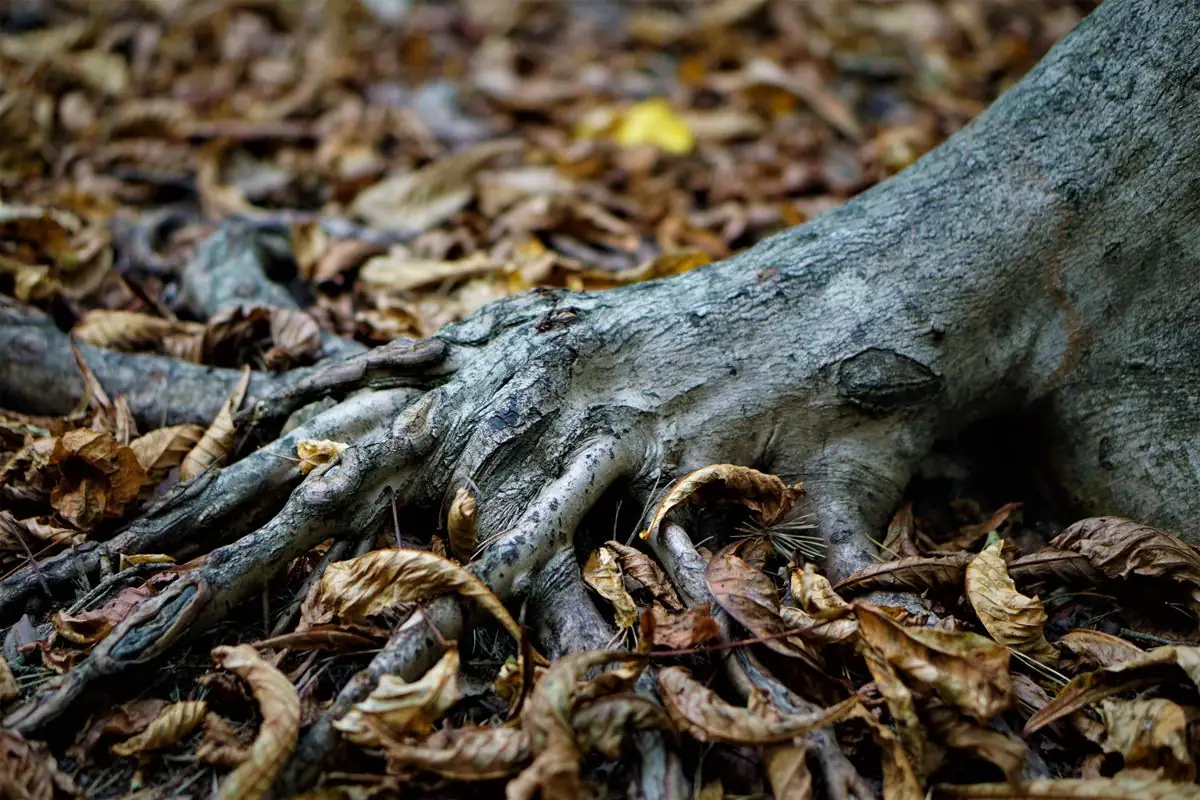
Signs you need tree root removal
Roots do not block a line overnight, and they rarely announce themselves early. They creep in through a joint as fine hairs, then thicken each season until they form a mat that catches paper and grease. The pattern is what gives it away.
- The basement floor drain backs up every spring or every fall
- Toilets drain slowly across the whole house, not just one
- Gurgling from a floor drain while the washing machine empties
- A clean-out that worked for a few months and then failed again
- A large tree standing between the house and the street
Why it happens in Scarborough homes
Much of Scarborough's post-war housing was built with clay tile or cast iron sewer laterals. Clay comes in short sections joined with mortar or early gaskets, and every joint is a possible entry point. Cast iron rusts at the hub over time. Mature boulevard and backyard trees, planted when these neighbourhoods were new, now have root systems large enough to reach the line from well away from the trunk.
Roots are drawn to the warm, damp air leaking from a cracked joint. Once inside, they have water and nutrients, so they keep coming back after they are cut.
How the job is done, step by step
- We find an access point, usually the main clean-out near the front wall of the basement or the floor drain.
- A power auger with a root-cutting head is fed down the lateral. It shaves the roots back to the pipe wall.
- We run water and confirm the house drains freely.
- Where possible we follow with a camera inspection to see where the roots enter and how the pipe is holding up.
- You get a plain answer on whether periodic cutting is enough or whether a section needs sewer line repair.
What changes the cost
Length and depth of the lateral, how many entry points there are, and how easy the clean-out is to reach all play a part. A heavy mat that needs several passes takes longer than light growth. If the camera shows roots on the City's side of the property line, that part may be a matter for Toronto Water rather than the homeowner, and we will show you the footage so you can raise it with them through 311.
When to call right away
If water or sewage is rising out of the basement floor drain, give the taps and toilets a rest and ring us. Running the dishwasher or doing laundry only adds to what comes up. A blocked lateral will not clear on its own.